Automwrite vs AdvisoryAI
With AdvisoryAI, the adviser reviews an AI draft. Automwrite runs 70+ checks before the report is written.
Adviser workflows, client information, suitability documentation — the overlap is real. Automwrite applies missing-data checks, conflict checks, and firm rules before it writes the firm-formatted report; AdvisoryAI produces an AI draft for the adviser to review.
Self-onboard in 2 minutes
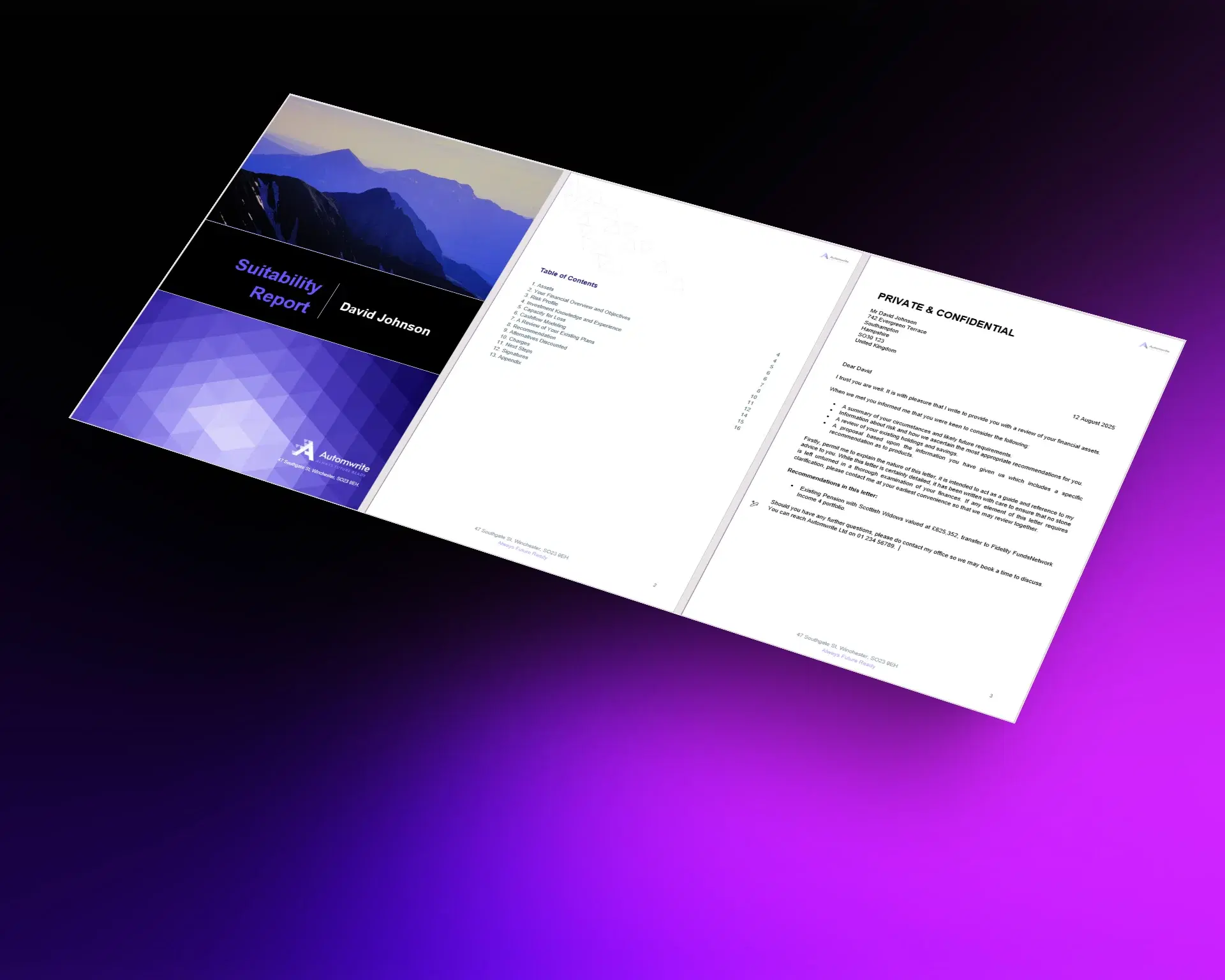
The report method matters
A difficult suitability report needs more than a first draft.
Several recommendations, inconsistent records, firm-specific advice content, conditional sections, and professional approval must be resolved as one controlled case. Automwrite keeps those decisions inside the report workflow.
Where Automwrite separates
The case is controlled before the document is written.
Automwrite turns checked case data and centrally managed firm content into a report that can move through review, Word output, and signature.
Several recommendations, one report
Linked advice is composed inside one case rather than split across separate drafts.
Firm advice content stays reusable
Services, fees, risk wording, platforms, portfolios, and house style are maintained centrally and applied consistently.
The workflow reaches completion
Adviser and paraplanner approval, firm-formatted Word output, and Adobe Sign keep the case moving after the writing stage.
Automwrite vs AdvisoryAI
Compare the work behind an approval-ready report.
The rows below test the controls that determine whether a complex suitability report is ready to approve, issue, and sign.
Automwrite is best for
AdvisoryAI is best for

Proof in production
Compliance-gated checks run automatically before a report can be written
Linked recommendations remain inside one advice case
Approval and Adobe Sign remain inside the workflow
“Really impressed so far. The output is more human and lifelike than some of the other AI options I have seen.”
Senior Financial Adviser, Purpose FP
What the research shows
The deciding issue is the report method, not the length of the feature list.
AdvisoryAI publishes meeting, integration, compliance-checking, and report capabilities. Its suitability-report method is generate then review: the model drafts the document and the adviser checks the result.
A specialist interface does not change the underlying method: the model still composes the report, and the professional still has to find what it got wrong. Automwrite takes a different route by checking the case first, applying centrally managed firm content, composing linked recommendations, and keeping approval, Word output, and signing in the same workflow.
Run one difficult case through both products. Use several recommendations, inconsistent source records, firm-specific service and investment wording, and a strict output format. Compare the completed document and the correction effort.
Summary
- The overlap: adviser workflows and suitability documentation.
- The decisive difference is whether the case is checked before report writing or the draft is checked afterwards.
- Automwrite carries the complex case from verified information to approval and signature.
Run the hard case
Use the case that normally creates the most paraplanner work.
Include linked recommendations, conflicting records, firm-specific wording, and a strict output format. Measure factual corrections, structural edits, approval effort, and time to signature.
FAQ
Questions to settle before you choose.
Keep comparing
More Automwrite comparisons
Download