Automwrite vs Templi
Firm Word formats and Intelliflo on both sides. Automwrite also reshapes the report around the case.
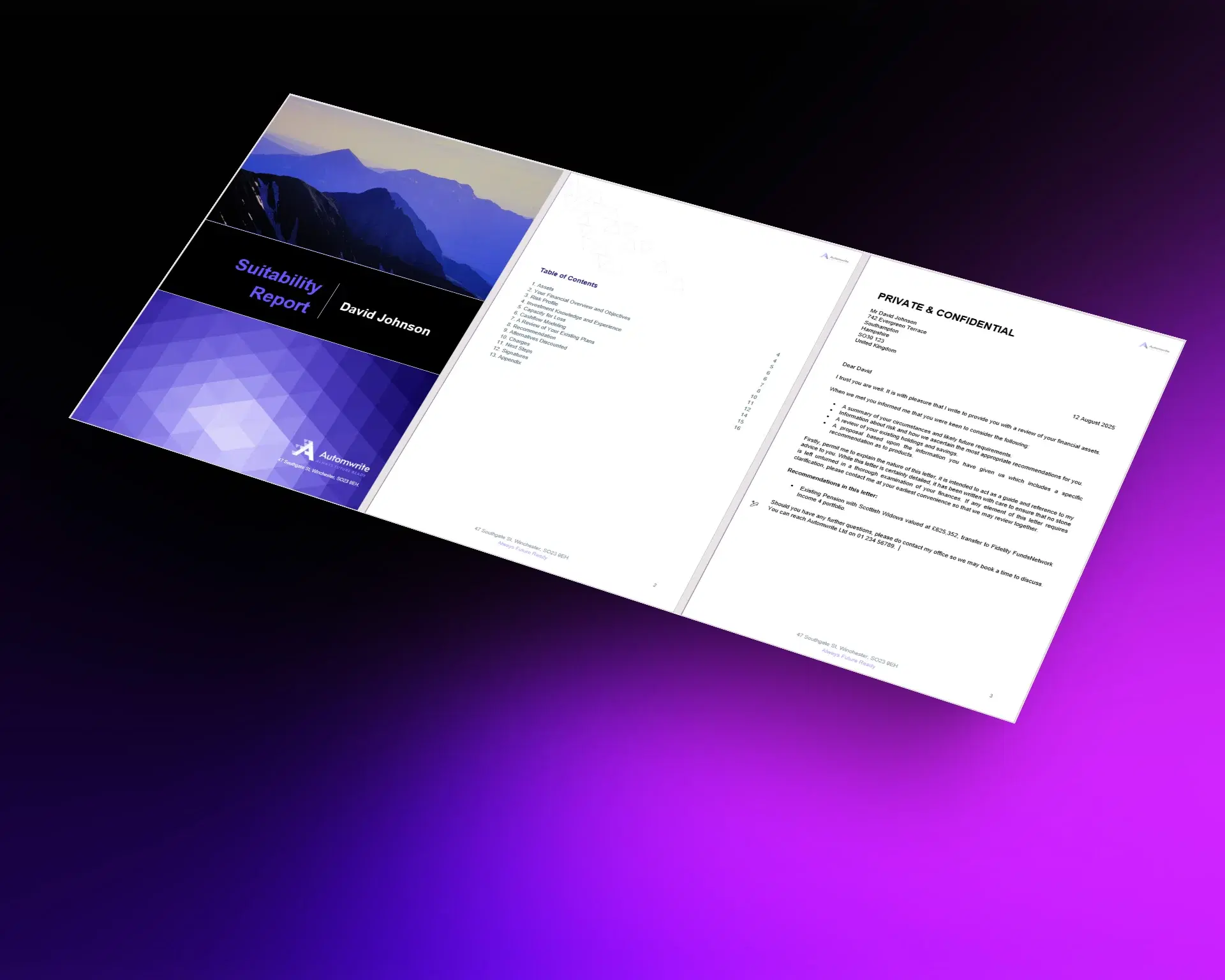
Templi writes cited content into the firm's template for adviser review. Automwrite checks the case first, then uses linked advice, firm controls, and conditional structure to produce the appropriate report and carry it through approval and signature.
Self-onboard in 2 minutes
Structure and content
Template fidelity does not decide which sections and advice paths the case requires.
Complex suitability work must identify the applicable advice paths, combine several recommendations, apply the firm's service and investment model, resolve inconsistent records, and carry the document through professional approval.
Why firms choose Automwrite
The report structure changes with the advice being given.
Automwrite treats case logic, firm data, and workflow as explicit controls around the document.
Linked recommendations
Several advice paths are composed inside one report workflow.
Case-adaptive structure
Sections appear and disappear according to the advice, client circumstances, and required evidence.
Completion beyond Word
Conflict checks, adviser and paraplanner stages, mobile access, open API, and Adobe Sign complete the case.
Automwrite vs Templi
Compare template-led document production with case-adaptive report control.
From shared Word and integration capability, the rows move to linked advice, conditional structure, conflicts, professional approval, and signing.
Automwrite is best for
Templi is best for

Proof in production
Linked advice is assembled inside one report workflow
Sections change with the advice being given
Checks run before content and structure are written
What the research shows
Templi works inside the template. Automwrite controls the case and the report structure.
Firm Word formats and Intelliflo are common ground. Templi writes cited content into an existing template for adviser review. Automwrite also applies linked advice, centrally managed firm controls, conflict handling, conditional sections, professional approval, mobile access, API integration, and Adobe Sign.
The decisive distinction is structural. Templi includes source citations, while the report still has to change its advice paths and sections according to the case. Automwrite makes that conditional structure part of the product workflow.
Summary
- Firm Word formats and connected document workflows appear on both sides.
- Templi provides cited template-based content for adviser review.
- Automwrite adds linked advice, case-adaptive structure, checks, approval, and signing.
Test the structure
Use a case that forces the report structure to change.
Combine linked advice, firm-specific content, charges, and inconsistent records. Compare which workflow produces the appropriate sections and carries the document through approval and signing.
FAQ
Questions to settle before you choose.
Keep comparing
More Automwrite comparisons
Download